Best Leather Holster for a Revolver: J-Frame and Trail Gun Carry
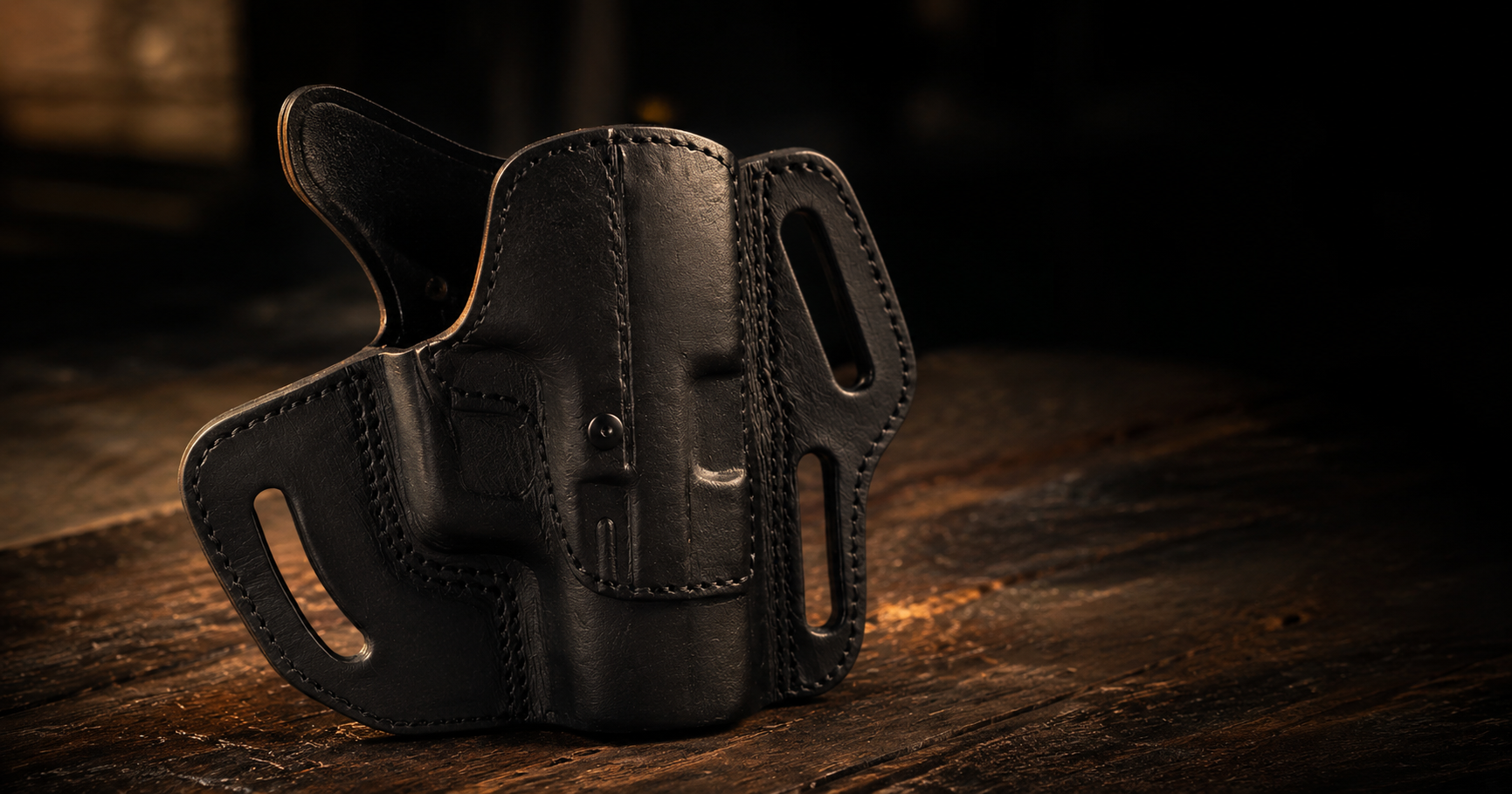
Revolvers need a holster built around the cylinder, not a slide. A practical guide to leather carry for J-frames, snub-noses and big-bore trail guns — concealment, thumb-break retention, fitment codes and break-in.
Best Leather Holster for a Revolver: J-Frame and Trail Gun Carry
Revolvers never went away. Walk any range in the country and you'll still find snub-nose wheelguns in pockets, .357s riding chest-high on elk hunts, and single-actions coming out of leather at Cowboy Action matches. The revolver survived the polymer era because it does a few things extremely well — and the people who carry one tend to know exactly why.
What has not survived as well is the holster market around them. Most modern carry gear is built around the flat, rectangular profile of a striker-fired semi-auto. A revolver is neither, and a holster that ignores that will print, shift, or spit the gun loose at the worst possible moment. If you carry a J-frame, an LCR, or a big-bore trail gun, fitment matters more than on almost any other platform — which is why it's worth starting from a holster built for your specific wheelgun rather than a universal pouch that fits nothing especially well.
Why a Revolver Needs a Purpose-Built Holster
Three things about a revolver change the holster math.
The cylinder is the obvious one. It's the widest point of the gun and it sits in the middle, not at the muzzle or the grip. A holster molded around a slide-shaped pistol either squeezes the cylinder or leaves the muzzle flopping. Leather that's been wet-molded to the actual cylinder diameter holds the gun at three points instead of two, and that's where a revolver's retention comes from.
The grip angle is the second. Revolver grips — especially the rounded butt on a J-frame — roll away from the body differently than a squared semi-auto grip. Get the cant wrong and the grip digs into your ribs on the draw or pushes a visible bulge into your cover garment. Get it right and a snub-nose disappears under a t-shirt better than almost anything else you can carry.
The third is barrel length, and this is where most universal holsters fall apart. A 2-inch snubby and a 6-inch field gun are not the same holster with a different label. The mouth geometry, the sweat guard height, and the retention point all shift.
🔶 Product Spotlight: The Backdraft TB
The Backdraft TB is Tagua's dedicated leather revolver holster — an OWB thumb-break rig built specifically for wheelguns that go where things get rough. The reinforced thumb-break strap locks the revolver in place through hiking, horseback riding, ranch work, and ATV use, where an open-top holster can let a heavy gun work loose over uneven ground.
Coverage spans 9 fitment codes, from compact S&W J-Frames and 2-inch, 4-inch and 6-inch snub-nose revolvers all the way up to full-size N-Frame .44 Magnums and single-action cowboy guns with barrels to 7.5 inches. The body-contoured back panel sits flat against the waistline so the rig stays stable over heavy layers and field gear, and the ambidextrous design works for left- and right-hand shooters alike. $69.00, handcrafted by our leather artisans and backed by our Lifetime Warranty. See the full OWB lineup →
Carrying a J-Frame: Concealment Is the Whole Point
Nobody buys a J-frame for capacity. They buy it because five rounds in a package that vanishes beats fifteen rounds you left at home. So the holster's job is concealment first, everything else second.
For inside-the-waistband work, hardware is usually the enemy. Clips catch on belts, print through thin cotton, and leave a metal edge against your skin by the third hour. The Settler IWB takes the other approach entirely — no clips, no snaps, no metal at all. A slip-resistant exterior grips the waistband and holds position through the day, and the J-Frame fitment means the cylinder is molded, not just accommodated.
If you want the same carry position at a more accessible price point, the Ecoleather IWB covers the J-Frame, LCR, and Bodyguard 38 profiles specifically.
A note on the belt, because it's the part people skip: a revolver is dense and it rides low in the pants. Threading a good holster onto a soft dress belt guarantees sag, and sag guarantees printing. We wrote a full breakdown of why a real gun belt matters — it applies double to wheelguns.
Trail Guns: Retention Beats Speed
Backcountry carry flips the priorities. Nobody is running a match-speed drawstroke on a mountainside. What you need is for a heavy revolver to still be in the holster after eight hours of climbing, glassing, and dropping into a truck seat.
That's the case for a thumb-break. A retention strap adds maybe half a second to the presentation — and eliminates the far more likely failure mode, which is a .44 sliding out of an open-top rig while you're crawling under a fence. For anyone carrying a bear-country wheelgun or a big single-action in the field, the strap isn't a compromise. It's the correct choice.
Chest and shoulder rigs are worth considering here too, especially over a pack frame where a belt holster gets buried under a hip belt. Our field carry guide for hunters walks through when each position actually makes sense.
The Single-Action Exception
Cowboy Action shooters live in a different world, and their holsters follow different rules — deep-drop rigs, wide belt loops, and an open-top profile tuned for a specific match drawstroke rather than concealment. If that's your discipline, the Western holster category is where to look, and our piece on single-action holster history covers where those designs came from and why they're shaped the way they are.
Leather, Fitment, and the First Two Weeks
Every Tagua holster is wet-molded and hand-finished — from raw hide to finished rig, every step by hand, the way it's been done here since 2005. That's also why a new leather holster feels tight out of the box. It's supposed to. The leather is holding a shape it hasn't yet learned, and the first two weeks of wear are what turn a stiff piece of cowhide into a rig that indexes the same way every single draw.
Our break-in guide covers the process, but the short version is: wear it, draw from it, and don't try to shortcut it with water or heat.
For shooters who want the heaviest leather we make, the Elite Series uses extra-thick, grain-selected cowhide — noticeably stiffer and more durable than our standard line. The Colorado Elite OT carries 16 fitment codes covering everything from J-Frame revolvers to L-Frame wheelguns and full-size semi-autos, if you want one Elite rig that spans the whole safe.
Choosing Yours
Match the holster to the job, not the other way around:
- Deep concealment, J-frame or LCR → clipless IWB, molded to the cylinder
- Field, trail, or bear country → OWB with a thumb-break strap
- Cowboy Action or single-action collecting → Western rig, open top
- One gun to cover several → check the fitment code list before you assume
Every Tagua holster is made to order and ships within 15 business days, because each one is cut and molded for the gun you actually carry. Free shipping on orders over $100 within the continental US, and every rig is covered by our Lifetime Warranty against defects in materials and workmanship. Browse revolver-compatible holsters →
Frequently Asked Questions
What is the best holster for a S&W J-Frame revolver? It depends on how you carry. For everyday concealment, a clipless IWB like the Settler IWB molded to the J-Frame profile hides the gun without hardware printing through a shirt. For field or outdoor carry with the same revolver, the Backdraft TB adds a thumb-break retention strap and rides OWB.
Do I need a different holster for a 2-inch versus a 4-inch revolver? Yes. Barrel length changes the holster body, the sweat guard height, and where the retention point sits. That's why our revolver holsters are listed by fitment code rather than sold as one universal size — the Backdraft TB alone spans 9 codes to cover the range properly.
Is leather or a rigid synthetic shell better for a revolver? Leather molds around the cylinder and grip in a way a stamped rigid shell can't, so it holds a wheelgun at more contact points and carries flatter against the body. It's also quieter and gentler on the finish, which matters if you're carrying a blued revolver you intend to keep.
Will a leather revolver holster stretch out over time? Properly tanned, wet-molded leather sets to the gun during break-in and then holds that shape. It softens at the mouth for a smoother draw, but a correctly fitted holster does not loosen into a floppy pouch. Conditioning it once or twice a year is enough.
Can I carry a large-frame .44 Magnum comfortably on a belt? Yes, with the right two pieces. A body-contoured OWB holster keeps the weight tight against your side instead of levering away from it, and a stiff gun belt keeps the whole rig from rolling. Without a real belt, any large-frame revolver will sag and drag.
Carry laws vary by state and by locality. Check your local regulations before carrying concealed or openly.